
Rear-Side Glass Cracking in Large-Format Bifacial Solar Modules: An Emerging Operational Risk
Large-format bifacial glass/glass modules have become a mainstream choice across utility-scale solar, offering strong performance potential and durability advantages in many environments. But as module formats continue to increase in size, the industry is also seeing a growing reliability concern: rear-side glass cracking.
This issue is now receiving serious attention across industry technical briefings and reliability discussions, including from organisations such as Kiwa PI Berlin, Kiwa PVEL and Fraunhofer IIS. What was once seen as an isolated defect risk is increasingly being recognised as a practical operational challenge for asset owners, EPCs, O&M providers, insurers and manufacturers.
At Above, we are already supporting solar asset owners in detecting, recording and managing rear-side glass cracking at scale.
Why rear-side glass cracking matters
In simple terms, the rear pane of glass in many large-format bifacial modules is thin, large and structurally sensitive.
The challenge is made worse by design features such as junction box cut-outs, which can create discontinuities in the glass. When combined with larger module dimensions, increased weight and real-world site conditions, the rear glass can become more stress-sensitive than many asset owners may expect.
This does not always result in an immediate electrical failure. In many cases, a cracked rear pane may not be obvious during routine monitoring. The issue can become visible only later, after moisture ingress or related downstream effects begin to impact module performance.
That makes early detection and structured evidence capture essential.
What is driving the issue?
Rear-side glass cracking is rarely caused by a single factor. More often, it results from a combination of design, manufacturing, logistics, installation and field conditions.
Transit and handling
Large-format modules are more difficult to transport and move safely. Even small handling issues can introduce micro-damage before the module is installed.
Installation practices
Lifting methods, clamping positions, torque settings and support conditions can all introduce stress concentrations. In some cases, installation-related stresses may not lead to visible cracking immediately, but they can weaken the module over time.
In-situ loads
Once installed, modules are exposed to dead weight, sagging, wind, snow and other environmental loads. Rear-side tensile stress can initiate or worsen failure, particularly when there is already underlying damage or stress within the glass.
Low-energy trigger events
Minor impacts, such as mowing stone chips, debris strikes or localised loading, may appear insignificant. But when the rear pane is already sitting in tension, these low-energy events can become the final trigger for visible cracking.
Why classification is critical
A major challenge for the industry is the lack of fully consistent classification around rear-glass cracking.
How should different crack types be described?
How much can be inferred from the crack pattern?
Can the likely root cause be attributed to handling, installation, product design, site activity or operational loading?
These questions matter because root cause attribution drives liability.
For affected assets, classification can influence warranty claims, EPC responsibility, insurance discussions and remediation planning. Without a consistent and auditable evidence base, owners may struggle to demonstrate what has happened, where it has happened and how the issue is evolving over time.
Moving beyond spreadsheets
For large-scale solar portfolios, rear-side glass cracking cannot be managed effectively as a spreadsheet exercise.
Asset owners need a repeatable process that allows findings to be captured at module level, classified consistently, reviewed over time and linked directly to remediation actions.
That means combining inspection data, imagery, location, severity, tasks and history in a way that is structured, searchable and defensible.
How Above is helping asset owners respond
Above is supporting asset owners with a practical approach to detecting, recording and managing rear-side glass cracking at scale.
Our workflow combines:
Robotics and aerial data capture where appropriate
Targeted human inspection using mobile workflows
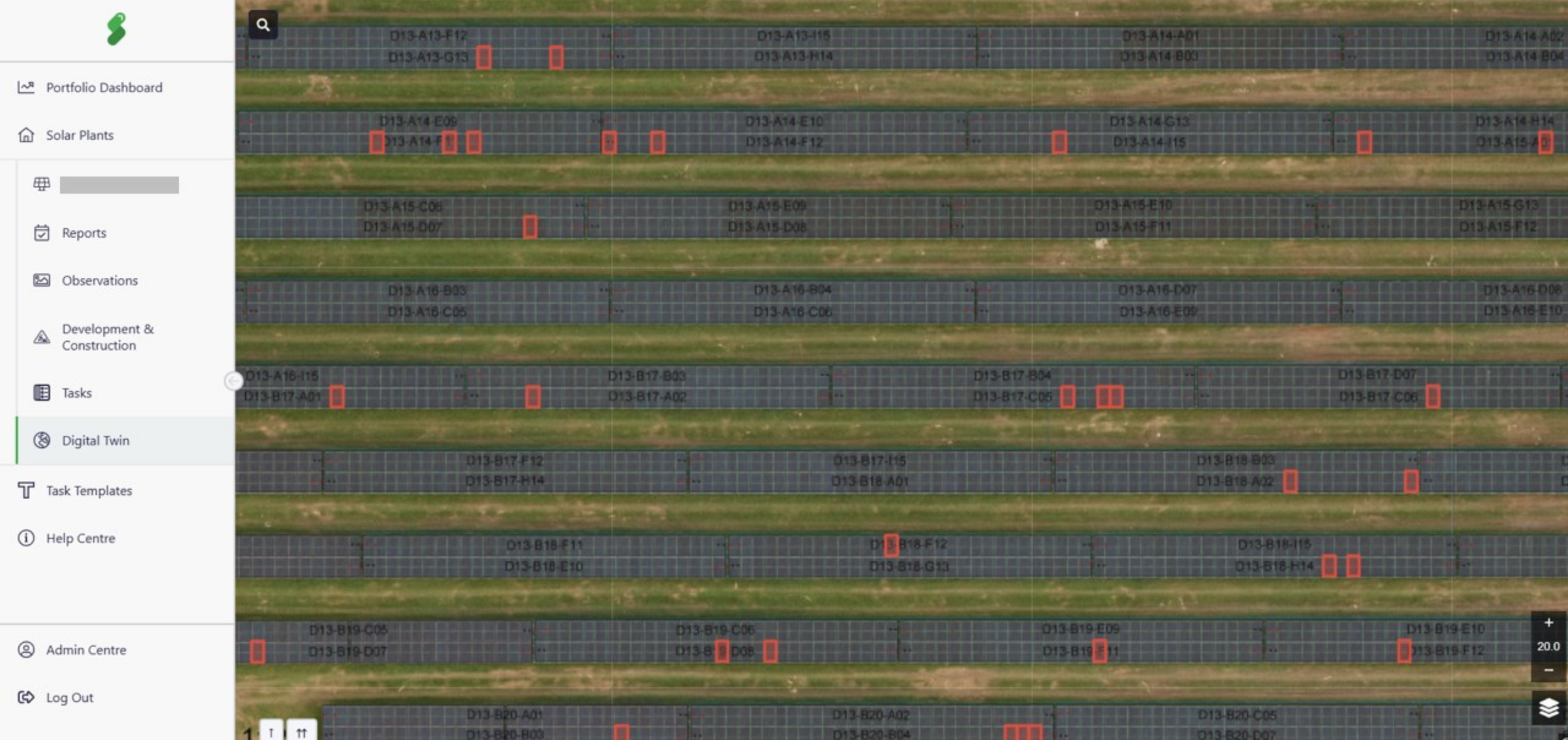
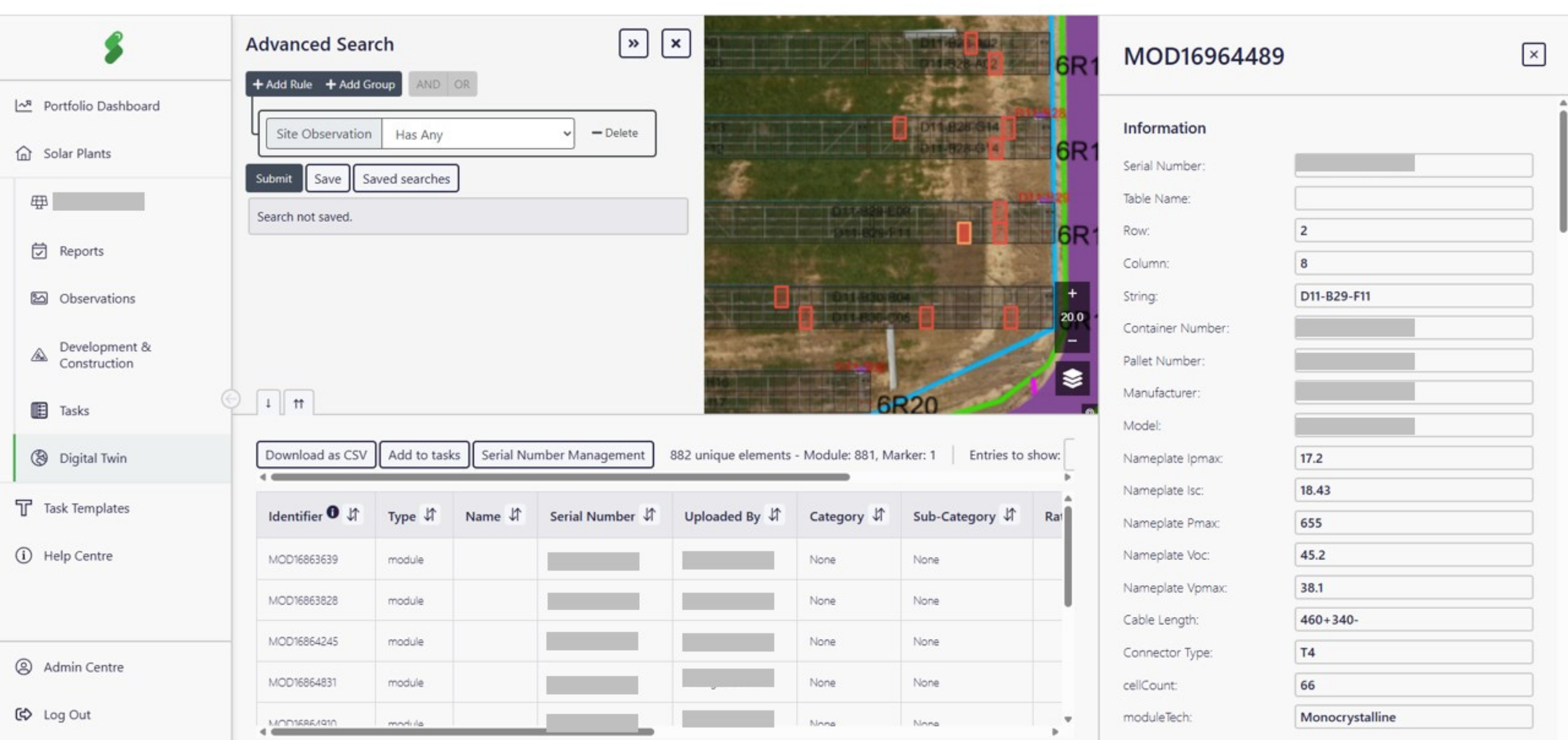
SolarGain, Above’s digital twin platform, to record findings at module level
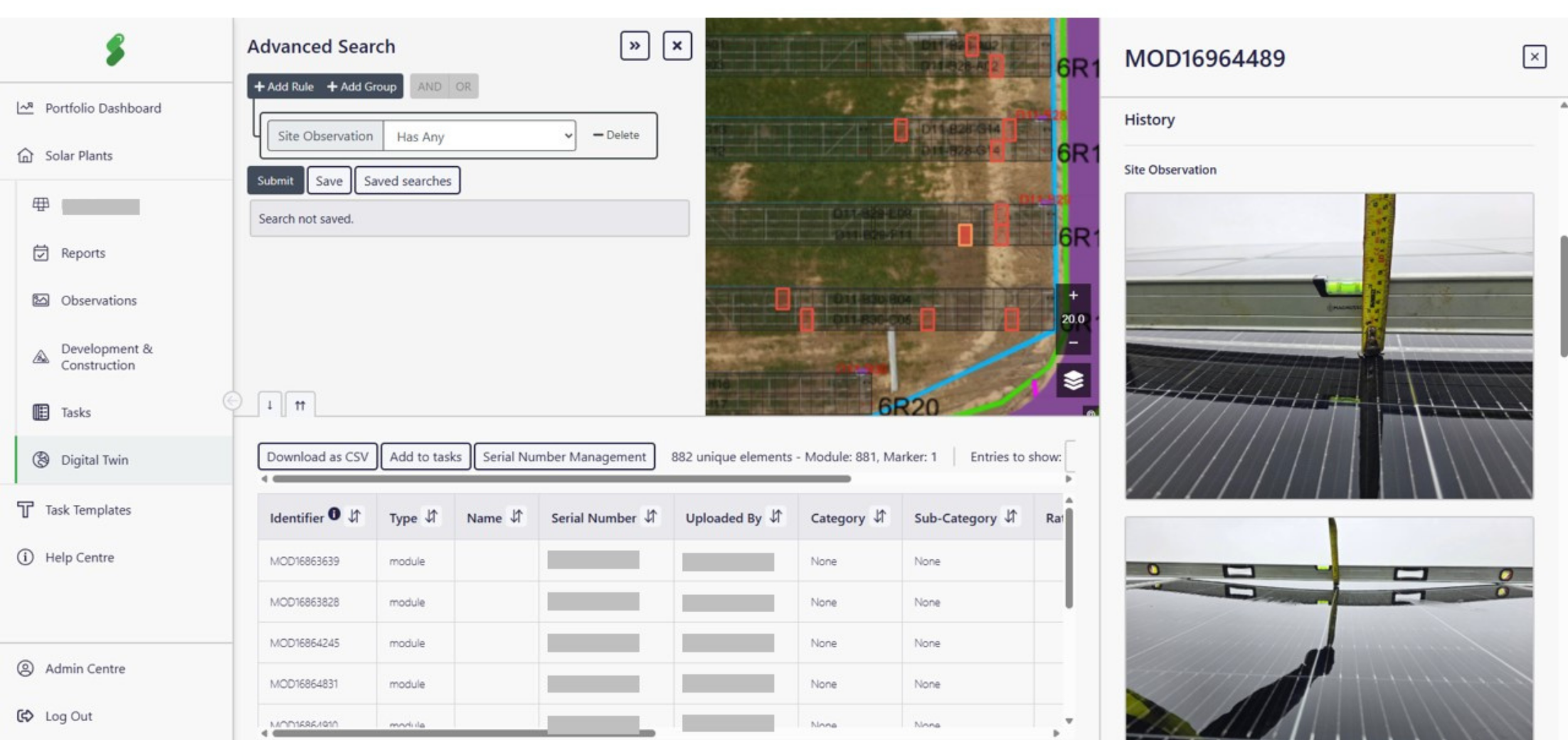
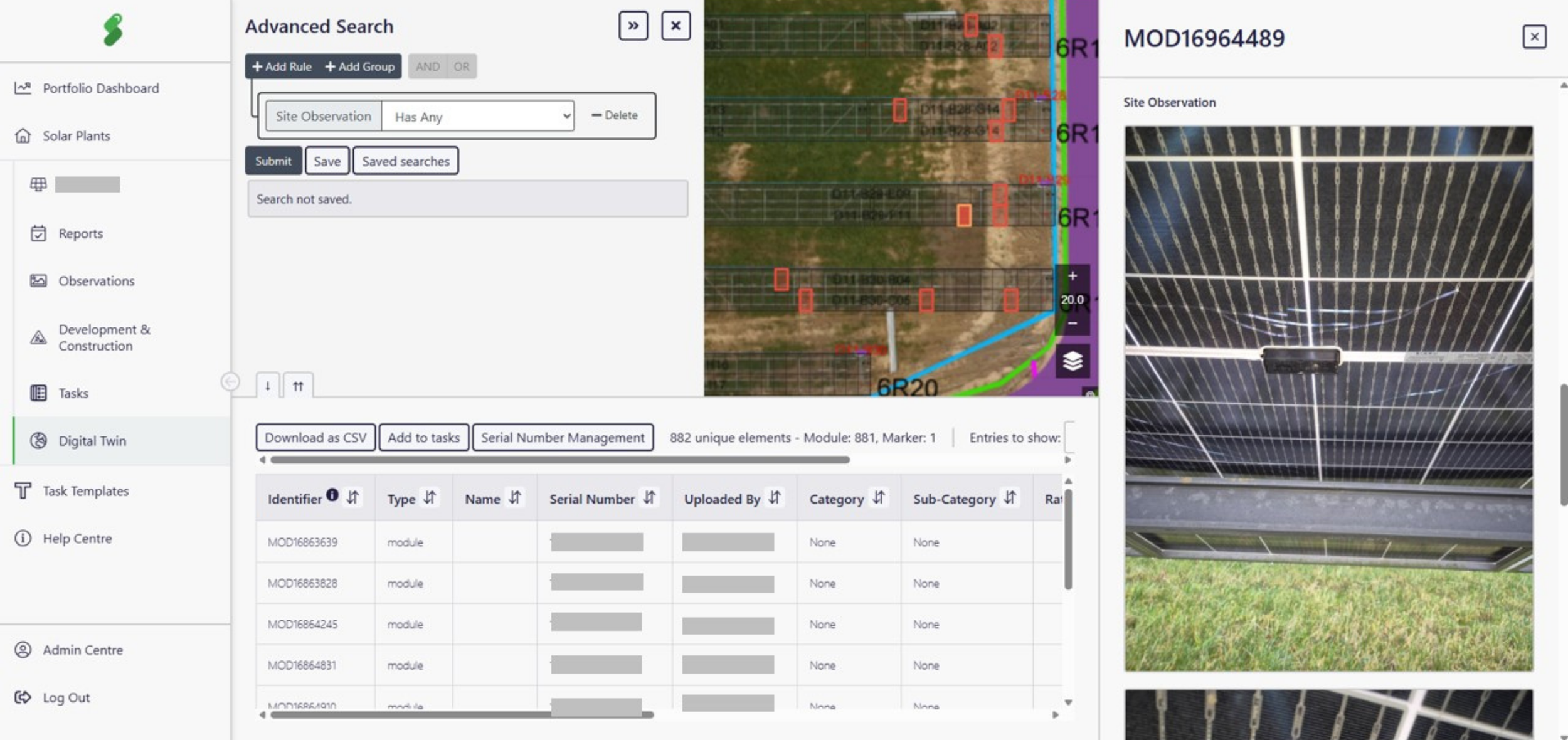
Within SolarGain, every rear-side glass finding can be logged with supporting evidence, precise location, severity, remediation tasks and an auditable history over time.
This allows owners to move from one-off inspection outputs to a repeatable portfolio process.
See below how our SolarGain platform can support with rear-side inspections:
Building warranty and insurance-ready evidence
When rear-side cracking is detected, the quality of the evidence matters.
A structured digital workflow enables asset owners to build a clear record of:
Where cracking has occurred
Which module types or mounting configurations are affected
How severe the issue is
Whether cracking is linked to site activities, installation conditions or environmental loading
What remediation has been completed
Whether repairs or replacements have been verified
How the issue is trending over time
This creates a stronger foundation for warranty, EPC and insurance conversations.
Getting ahead of rear-side cracking
Rear-side glass cracking is an emerging durability risk, but it can be managed with the right inspection and data strategy.
For asset owners, the priority is to move early: detect issues before they escalate, classify findings consistently and maintain a clear evidence trail across the asset lifecycle.
Above can support with:
Rear-side inspection programmes
Classification and triage workflows
Repair and replacement verification
Trend analysis by module type, mounting configuration and site activity
Warranty and insurance-ready evidence threads
As module formats continue to evolve, the industry needs practical, scalable ways to manage new reliability risks. Rear-side glass cracking is one of them, and early action will be key to protecting asset performance, reducing uncertainty and supporting better commercial outcomes.