
Electroluminescence (EL) is gaining momentum as a valuable tool in solar energy. But what is it and when should you use it?
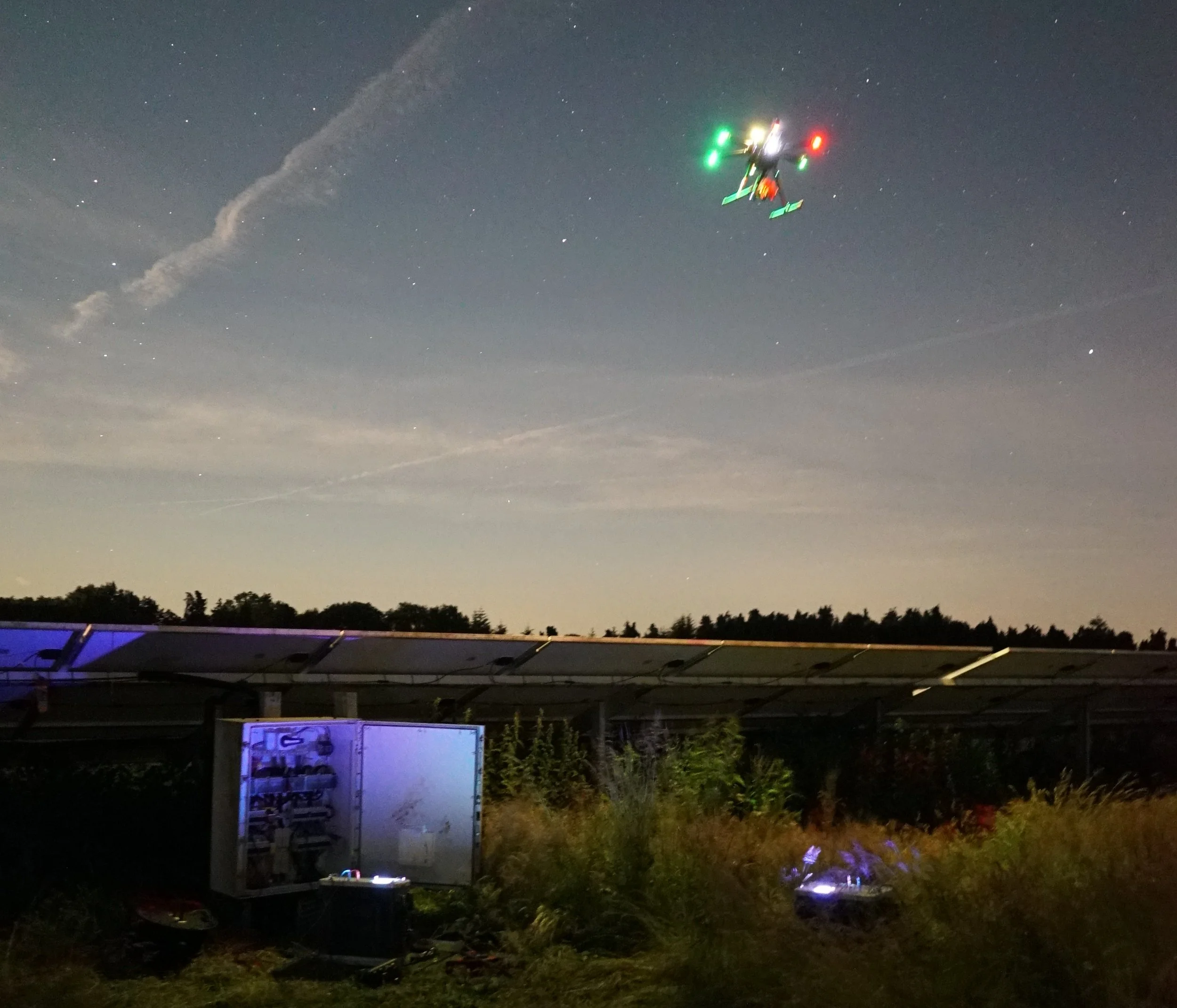
Aerial electroluminescence in action

By Ben Browne
3rd November 2026
Thermography Finds Your Problems.
Electroluminescence Predicts Them.
Most solar portfolios get an annual aerial thermography survey, which is fast, affordable and covers every module. Thermography surveys use long wavelength infrared (LWIR, or IR for the purposes of this article) to find faults that are causing power loss now like open strings, bypassed substrings, faulty junction boxes, soiling and shading.
What thermography doesn’t tell you is whether you have defects that aren’t leading to power loss yet. EL, on the other hand, sends current through the modules in the opposite direction to their usual working operation, turning them into LEDs! It then images the faint light the cells give off, so it shows where the module is electrically active. Defects that interrupt the flow of current, like a crack that cuts a piece of cell off from the busbars, leave that area dark in EL. Many defects that are too subtle to show up in IR can be visible in EL before any noticeable power loss.
EL does come with its downsides though. Because the EL signal is weak, it is conventionally collected in the dark, which means that visual (RGB) images can’t be captured alongside. Some issues, like shading, are visible in IR+RGB but not in EL. Conducting EL on your site is also more involved than letting in a drone pilot. A specialist contractor will need to connect a portable power supply, often run off a generator, to each combiner box one at a time to drive current through your strings in the opposite direction to normal operation (known as forward biasing) to capture the EL signal. This comes with extra logistical challenges compared to thermography.
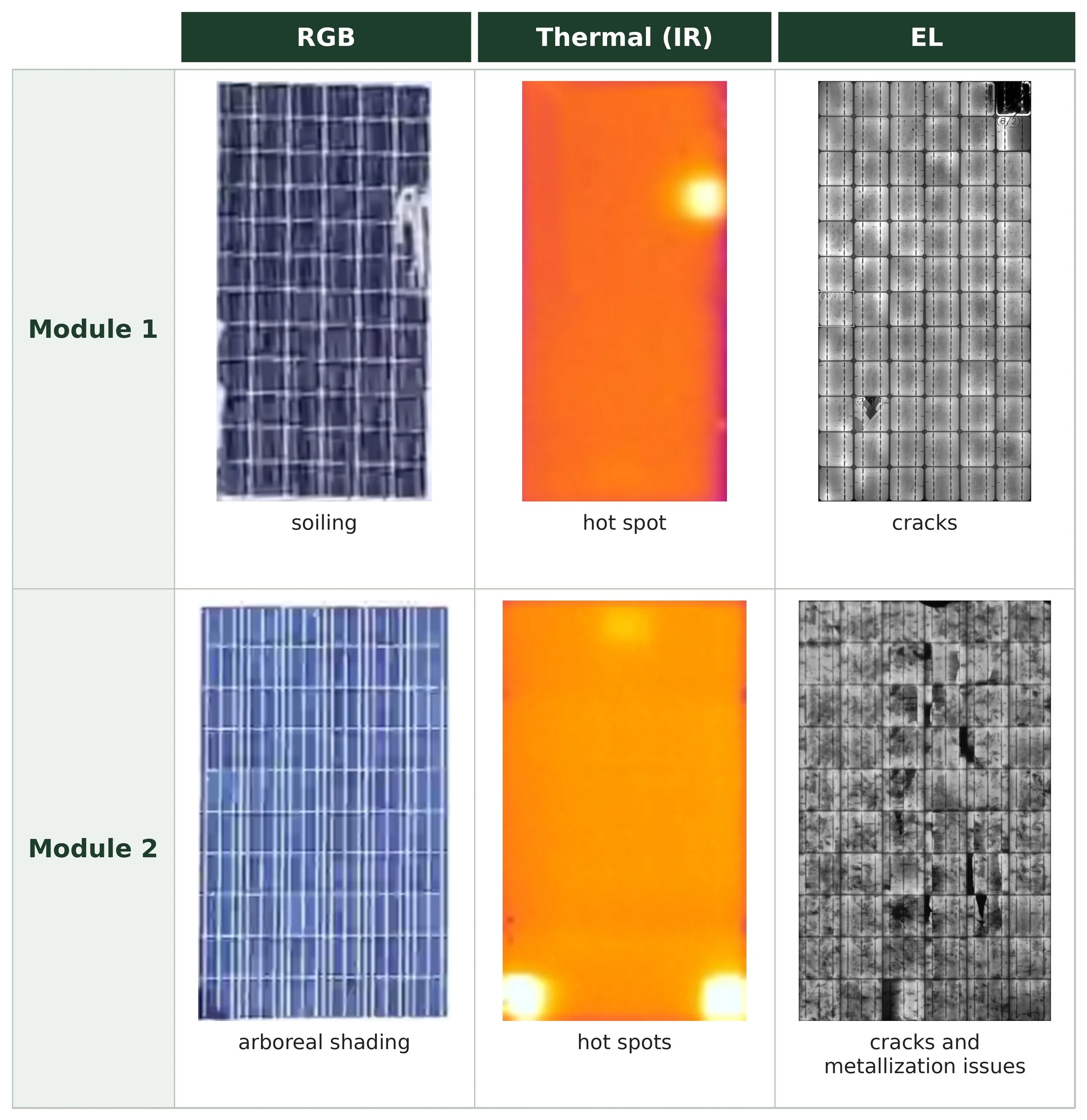
Two modules, one row per module. Each module is shown in RGB, thermal and EL imagery. Top module: soiling causes a hot spot in IR, while EL shows cracks elsewhere. Bottom module: shading from trees causes hot spots in IR, while EL shows cracks and metallisation faults across the module
Thermography is cheaper and a great generalist tool for surveying your entire portfolio. EL is more specialised and more expensive, but it can predict your module’s future and prove root causes that cannot be seen yet by other methods. Seeing problems early matters because a cracked module is a warranty and insurance question before it is a generation problem. Damage from transport or installation sits with the EPC or installer, damage from a storm with the insurer, and a manufacturing defect with the module maker, and each of those routes to recovering your losses has a time limit. An EL finding gives an asset manager evidence while there is still time to act: replace modules, raise a claim, or pursue an insurer after a weather event. The issue may take years to show up in thermography, by which time it may be too late.
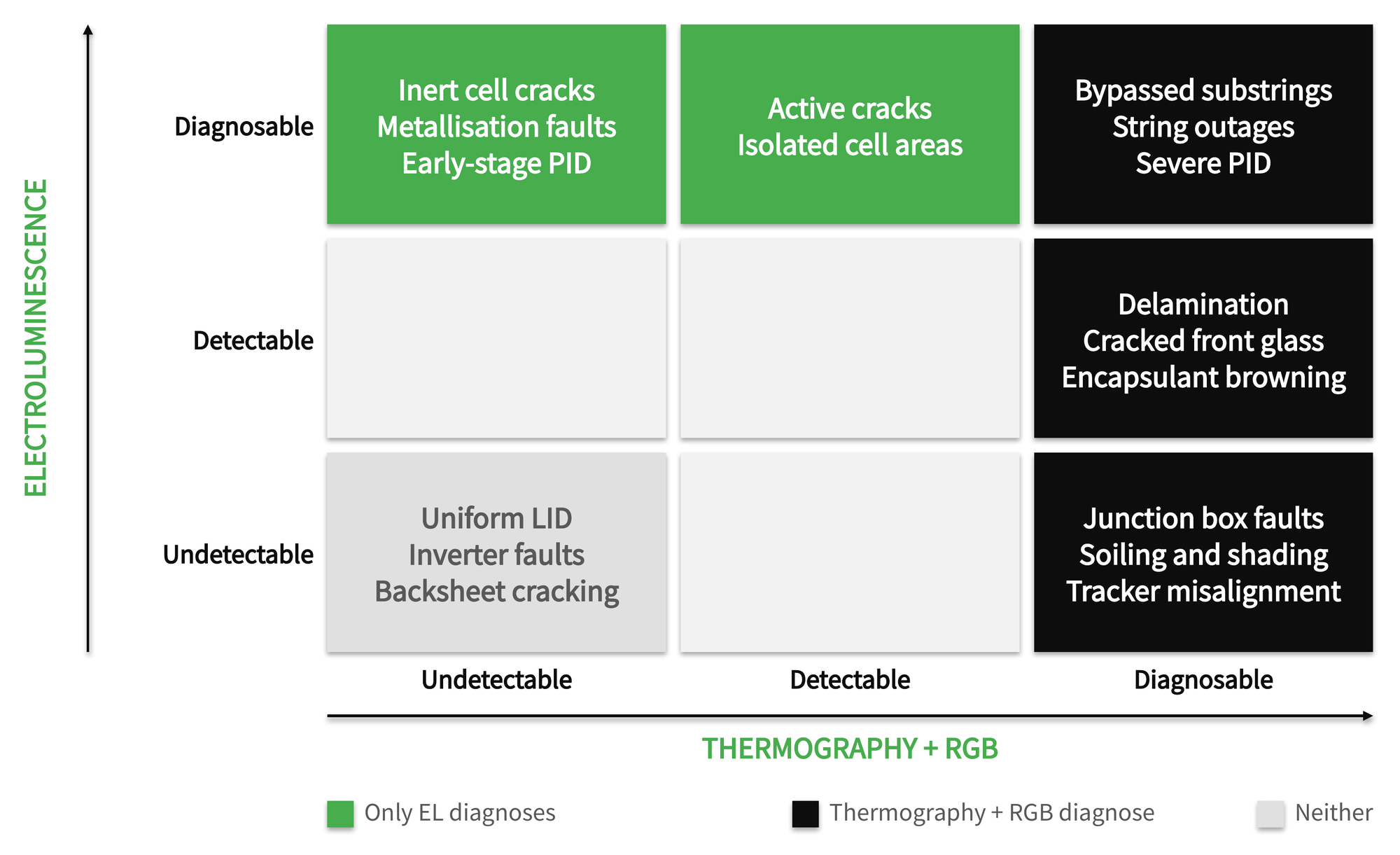
EL vs IR: which defects each method can diagnose
Case Study: Uncovering Hidden Defects With EL
On one solar site in Europe, an EL survey found cracked cells in nearly nine out of ten modules tested. Three annual thermography surveys later, three-quarters of those modules had still not shown up as a thermal anomaly.
Above surveyed the whole site with thermography at eight, nine and ten years after commissioning. In year eight the owner also had one block of the site EL tested by a specialist contractor, and the results were loaded into SolarGain alongside our thermal data.
Nearly 1000 modules in that block were tested. EL found isolating or branching cracks in 88.7% of them, with an average of about ten cracks per module. The contractor traced the damage to installation or transport: the cracks lined up with snail trails, which take months or years to form.
EL Showed Cracking Sooner, Thermography Never Caught Up
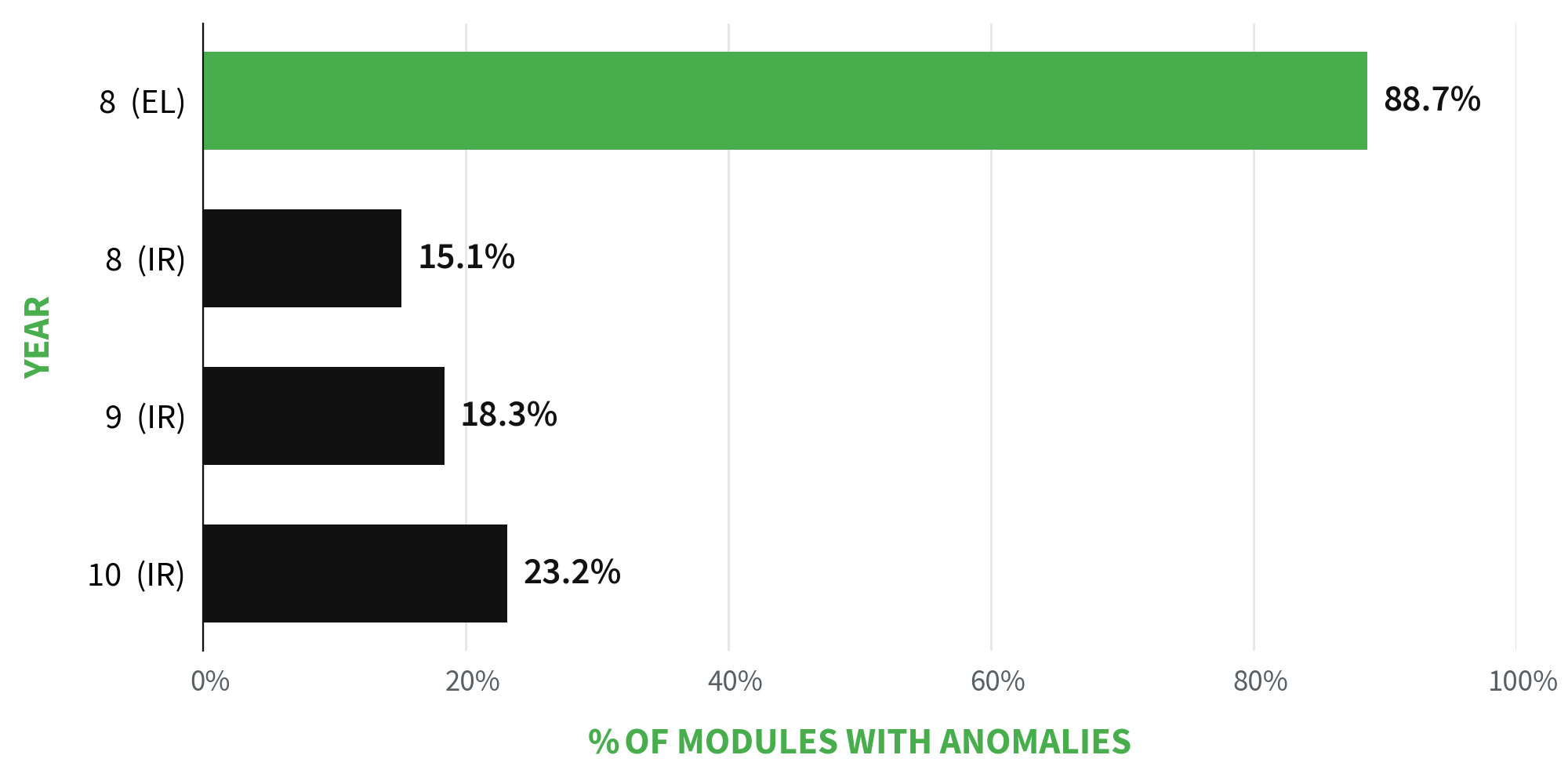
Over time the cracked cells gradually deteriorated to the point that thermography could pick some of them up as hot cells. But after three annual thermal surveys, 74% of them had still not shown up.
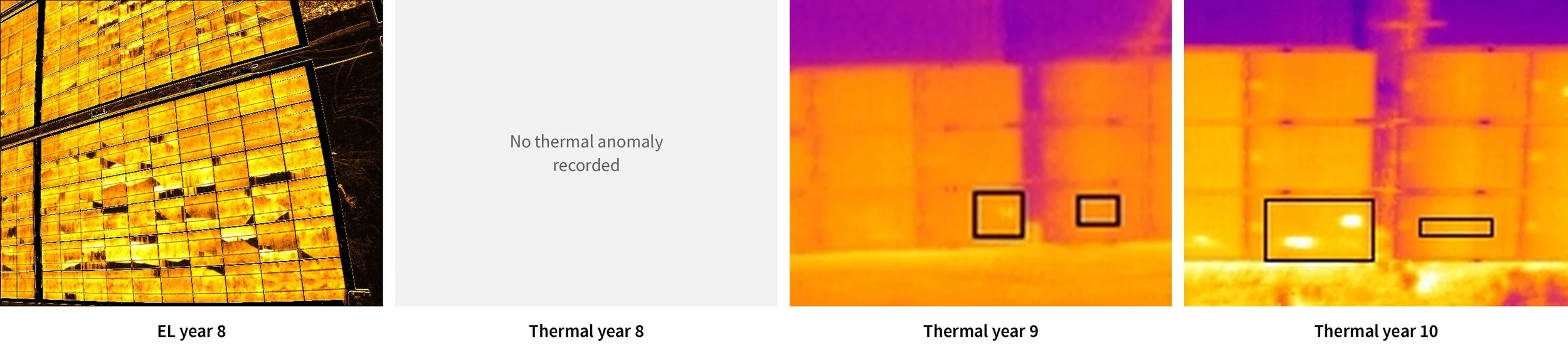
The same cracked modules over three years: EL in year 8 shows widespread cell cracks while thermography records no anomaly; hot cells appear in the thermal survey in year 9 and grow by year 10.
When to Use EL, and When Not To
EL is worth adding to a thermal programme:
At handover or acceptance of a new build, to catch transport and installation damage.
After hail, storms or other mechanical events.
When thermography shows multiple hot cells and you need to know the cause.
Before a product warranty expires.
During acquisition due diligence.
As part of a predictive maintenance plan where certain sections of a site are sampled to understand future degradation.
However, EL is not the right tool for:
A routine annual survey of a whole portfolio. Thermography does that job at a lower cost, and finds the faults EL cannot see.
Balance-of-system faults (inverters, cabling, trackers) or backsheet damage.
Not sure whether EL is worth it on your sites?
Send us your latest thermography report, from Above or any other provider, and we will tell you which sites or blocks would justify EL testing and where thermography alone is enough. If you decide to use EL we will work with a specialist collection partner and surface the EL insights and imagery directly in the SolarGain digital twin alongside the RGB, thermography, tasking and other centralised tools to help you manage your site.
Ask us about EL for your portfolio
What about EL in Daylight? Join the Webinar
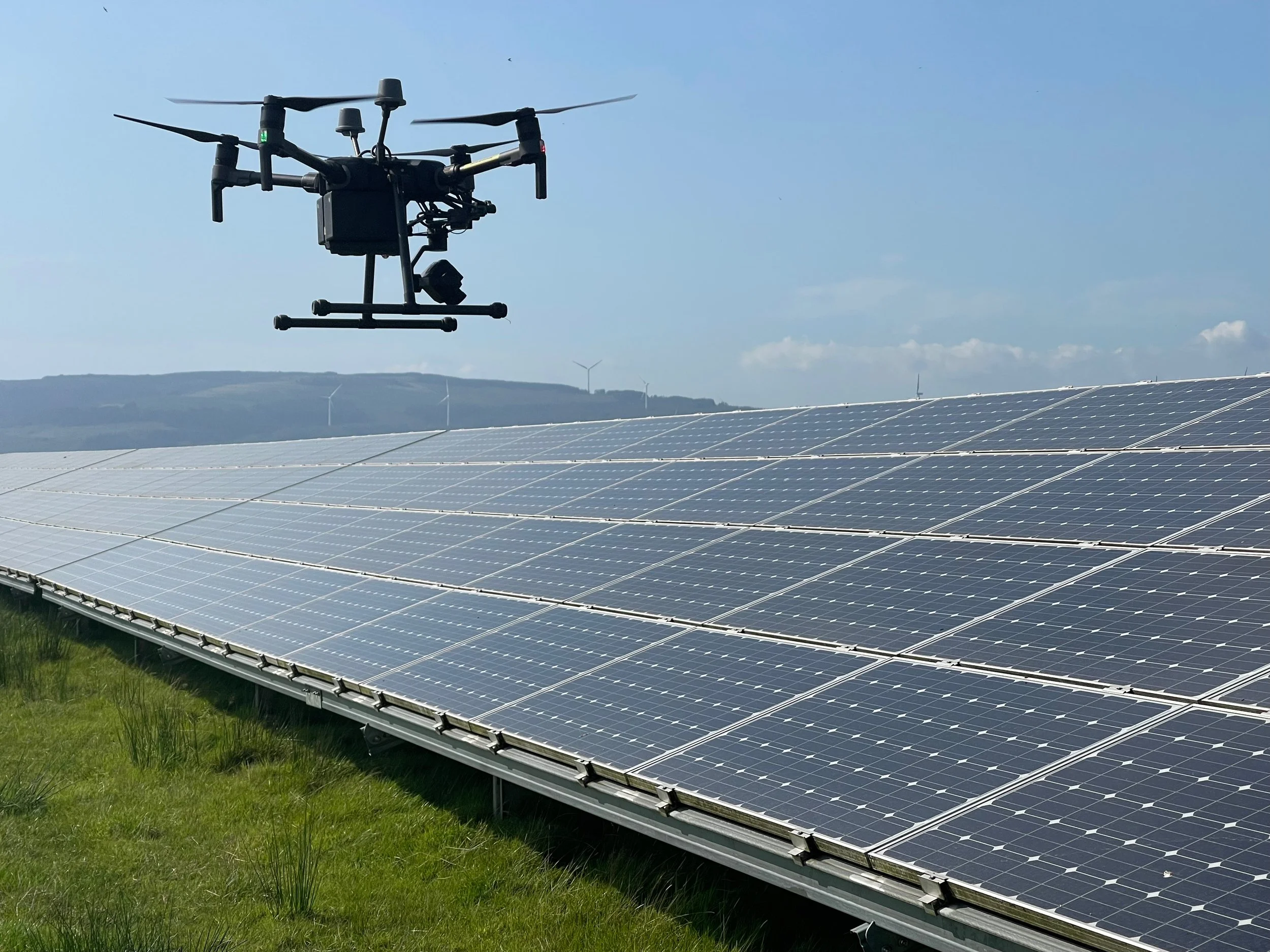
Above is working with AIR6 Systems and DTU in the Eurostars MULTISPECTRAL project on a novel technology to conduct daytime aerial EL surveys. This will improve cost and logistics by compressing two site visits into one and it will improve the ability to determine root cause by pairing IR and RGB imagery with simultaneous EL imagery.
Come to our free webinar on daytime aerial EL to learn how the data is captured and processed by our partners and how SolarGain can turn the raw EL imagery into insights and actions.
Date: 19 November 2026
Time: 17:00 to 18:00 CET (16:00 to 17:00 GMT)
Where: online, Google Meet, no account needed

MULTISPECTRAL (Eurostars 4774) is co-funded by the European Union through Eurostars-3 and by Innovate UK.